
How to Build Your First Deck in Town of Duels
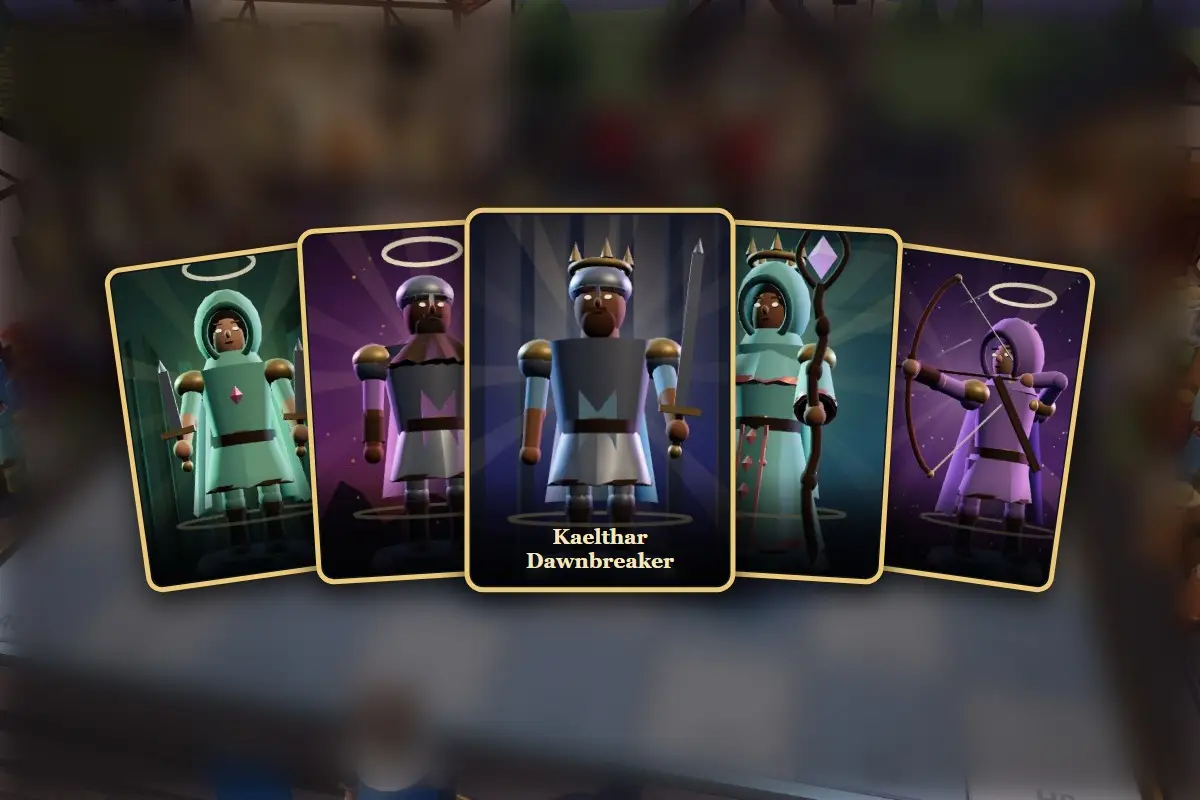
A good deck is a team, not a pile of your rarest cards. In Town of Duels your deck has to fill a board, answer threats and still be cheap enough to play every turn. This guide takes you through the rules, then shows how to build a deck that wins.
The deck rules
- A deck has exactly 20 cards.
- At least 14 must be characters, so you can bring at most 6 spells.
- You can run one copy of a character and up to two copies of a spell.
- You can bring only one Unique card.
- A deck can spend up to 32 deck points.
- It needs 2 to 6 characters in each of the four lines: Front line, Fighters, Ranged and Support.
How deck points work
Each rarity costs points: a Common is 1, a Rare 2, a Super Rare 3, an Epic 4, a Legendary 6 and a Unique 8.
Here is the easiest way to think about it. Twenty Commons cost 20 points, which leaves you 12 spare points to upgrade with. Swapping a Common for a Rare uses 1 of them, a Super Rare 2, an Epic 3, a Legendary 5 and a Unique 7.
So one Legendary, one Epic, one Super Rare, two Rares and fifteen Commons adds up to exactly 32. That is a strong and balanced deck. You always have to choose: one huge star or several solid upgrades. The limit exists so that a better collection helps you without simply deciding the match.
Fill the four lines
Every character belongs to one of four lines. The rules ask for at least 2 and at most 6 in each, which is a good guide to a healthy team anyway.
Front line
Tanks and Defenders take the hits and hold tiles. They protect your archers, block invaders and stand beside enemies to stop leader strikes. A Guard also protects the allies around it, which forces the enemy to deal with the Guard first.
Fighters
Fighters deal the damage up close. They win fights, flank targets and are usually the ones who walk into the enemy base to strike.
Ranged
Ranged characters shoot up to 3 tiles away, and melee fighters cannot hit back from there. Two or three of them behind a solid front line can decide a whole battle.
Support
Support characters heal, shield, inspire and expose. An Oracle can expose an enemy within 3 tiles, and an exposed enemy takes 1 more damage from every hit until your next turn. They rarely win a fight alone, but they make every fight better.
A simple team to start with
If you do not know where to begin, aim for this shape and adjust it as you learn:
- 4 Front line characters
- 5 Fighters
- 3 Ranged characters
- 3 Support characters
- 5 spells
That gives you 15 characters and 5 spells, with something for every situation. If you keep losing to archers, add a fast fighter. If your leader keeps getting hit, add another Defender.
Keep your costs low
You get 4 energy a turn and it does not carry over, so your energy costs matter as much as your points. If most of your cards cost 2 or 3, you can act every turn and rarely waste anything. A hand full of 4 cost cards means one play a turn, and one bad draw can leave you doing nothing.
A useful test: lay out your deck in your head and ask what you would do on your first three turns. If the answer depends on drawing one exact card, your deck is too expensive.
Do not spend every point on one star
A Legendary is powerful, but a Legendary alone will lose to a well placed team. It can be blocked, surrounded and worn down. One or two big cards with plenty of cheap characters usually beats a deck that is all top end, because the cheap characters arrive early and hold the board until your star lands.
Pick spells that answer problems
Spells work at once, so think about what could beat you, not only what looks exciting. You can bring up to 6, but they do not fill the board, so most decks want fewer.
- Damage clears a dangerous enemy before it reaches your base.
- Healing saves a key character after a hard fight.
- Strike power adds damage to your next strike, which can finish a leader a turn early.
- Unmasked City exposes the enemy, so every hit counts for more.
Test it, then change it
No deck is finished on the first try. Play a few battles against the computer and notice which cards sit in your hand turn after turn. Those are the ones to swap. Watch for the other warning sign too: if you often have energy left and nothing to play, your deck needs more cheap cards.
You can save several decks in the Deck workshop, which is a good way to try ideas without losing a list that works. Mastery is a nice bonus here: every character earns its own wins, so a character you trust will slowly earn Bronze, Silver, Gold and Platinum frames.
Where to get better cards
You will find new cards in the shop's packs and market, in the free daily card, from town goals and at the forge, where shards turn into a card of your choice. Spare copies of characters become replicas, which raise their level for battles against the computer. Levels do not count in online 1v1, so a sharp deck matters more than a high level one.
Ready to try your list? Open the game, or read our seven tips for new lords first.